
Residential Rewiring in Portland: What to Open, and What to Leave
Plaster dust on the drop cloth, and a loom of cloth wire disappearing into a lath wall that had been 'updated' in the kitchen only. The bedrooms were still 1912. That's residential rewiring in Portland more often than a clean gut. The decision is which runs are still live, which ones a remodel already replaced with NM, and whose plaster we're allowed to break.
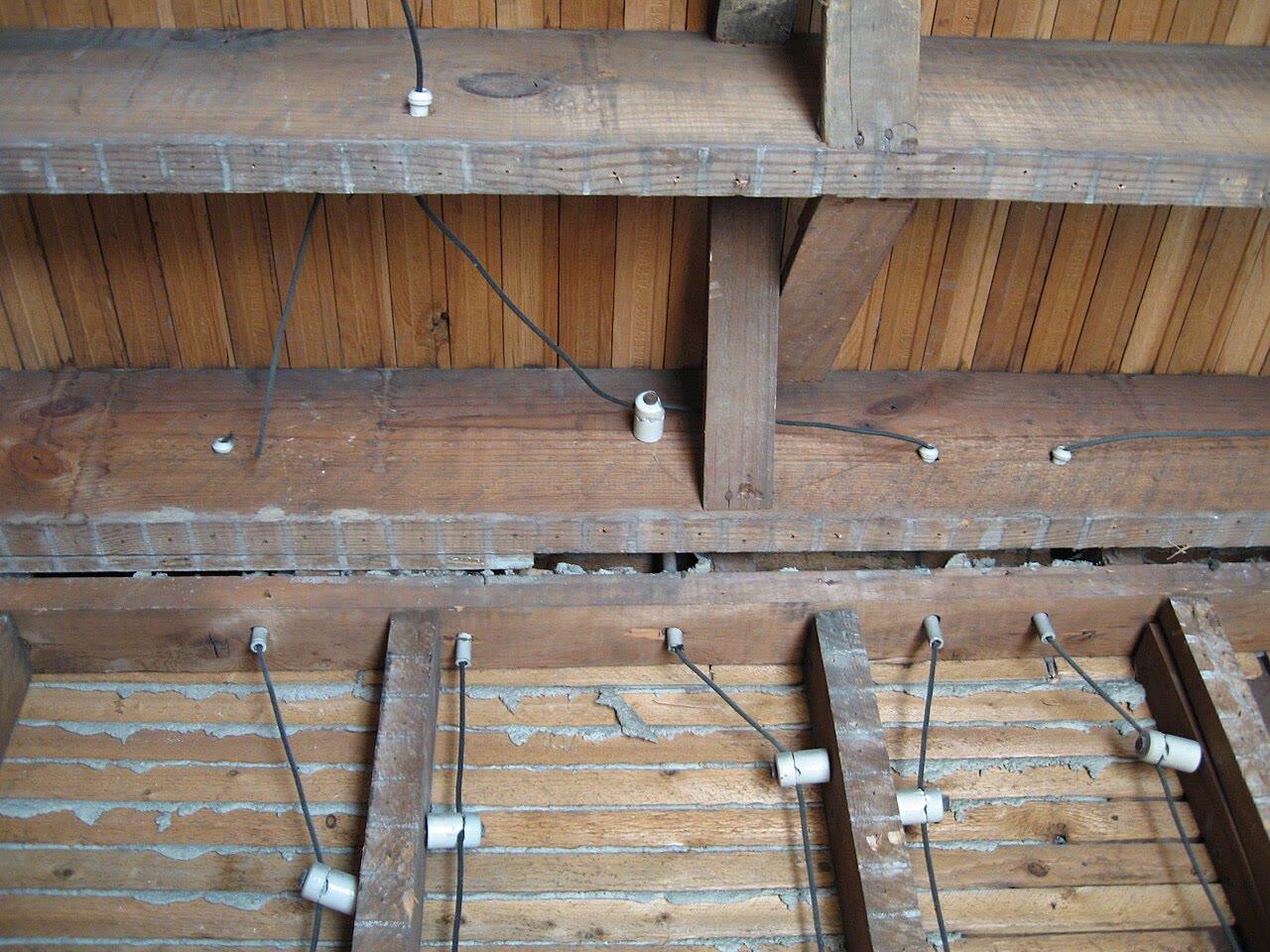

Attics lie less than kitchens
Eastside, close-in, older Oregon City. Knob-and-tube on the rafters even when the kitchen looks like last decade. Ungrounded receptacles. A fuse cabinet in a stair closet. Insulation piled on wire that was supposed to shed heat in open air. That combination is the one I don't shrug at.
A dead run can stay dead if we prove it's dead and cut it back. A live run feeding bedrooms comes out. Sometimes we fish from the basement and a closet. Sometimes the lath lets go and a fist-sized hole becomes a dinner plate. You'll know which walls before day one. Residential electrical is the call. If the kitchen is already coming apart, remodel wiring rides with that, not as a second demolition.
The city cares about the permit, not your scrapbook
Abandoned knob-and-tube that is still landed on a fuse is not abandoned. Inside Portland we file with the city's permitting bureau. We book the inspector. You don't stand at a counter.
New cable into a 60-amp fuse box wastes the permit. If the panel is Zinsco or Federal Pacific, or the service can't carry the house, the rewire and the panel upgrade are one utility window. One directory. The bond has to move if the plumber already took the galvanized pipe out and left PEX. We do that while the meter is off.
Basement apartments
Half these calls start as an ADU. The existing panel is sharing a 12-gauge run with a space heater and a garage welder. The unit needs its own calc. A subpanel the tenant can reach is sometimes enough. Sometimes the service has to grow first and the ADU waits. Wiring the apartment and pretending 100 amps is plenty is how you fail.
A heat pump and a charger are not reasons to rewire the hall lights. They are reasons to look at the service. Separate lines on the quote. Fix the bad wiring now. Add the 40- or 60-amp breaker when the main can take it.
You can sleep there
We keep a kitchen circuit and a bath up as long as the sequence allows. The service-change day is dark. That day is on the utility's calendar so you aren't guessing. We don't open a wall we didn't name.
Write this down before anyone starts: rooms in the scope, circuits that stay, whether the panel is included, what hours the power is off. 'Rewire house' on a lump-sum line is not a scope. At the end you want a permit number and a directory that matches the rooms. A coil of new cable in the attic with the bedrooms still on the old fuse is a story, not a rewire.
Buying? Ask for the permit number before you close. A walk-through of what's still live is a home inspection, cheaper than finding the knob-and-tube after the couch is in.
While you're still living in it
Dust is the part people underestimate. We cover what we can. We don't open a ceiling 'just to see' after we told you the path was a closet. Old plaster lets go in sheets. When it does, we stop and show you the hole before it gets bigger. If a GC is already opening the kitchen, the kitchen circuits happen then. I won't schedule a second demolition because we were polite and waited.
The dark day is the service change. PGE or Pacific Power, depending on the street. Lights, then the fridge, then heat, in that order, so the new main doesn't get slapped. A breaker that opens gets a reason before we leave. The directory on the door matches the rooms. That's the thing a buyer can use. A story about 'we rewired it' without a permit number is not. City inspections inside Portland are booked by us. You don't learn the counter system because we were too busy to file. Knob-and-tube that is still landed on a fuse is not 'abandoned' because someone stuffed insulation over it. We cut it back or we don't call the job done.
What stays
A kitchen that was already pulled in NM can stay. Bedrooms still on cloth or knob-and-tube do not, if they're live. We'll mark that on a sketch before we price a whole-house number you don't need. Paying to rewire rooms that are already modern is how these jobs get a bad reputation.
Common questions
Move out?
Who patches the plaster?
Is old knob-and-tube automatically illegal?
Just put grounded outlets on the old wire?
Year of the house, and a photo
Panel and one shot of the attic. We'll say what has to open.