
EV Charger Installation in Portland & Vancouver
Charge overnight at home or offer charging at your business. We install Level 2 chargers and commercial EV stations — including the load calculation, panel capacity work, and permit that make the install safe and legal.
- OR CCB #195783 · ELEC C818
- Licensed, bonded & insured
- 24/7 emergency response
- Generac Authorized Dealer
Paramount Electric Co. installs Level 2 EV chargers for homes across the Portland metro. Every install starts with an on-site assessment of your panel and charger location, so the price you approve reflects your actual house. The dedicated circuit, load calculation, permit, and inspection are all part of the job.
Home Level 2 charging
A 240-volt Level 2 charger adds 25–40 miles of range per hour. We install all major brands — Tesla Wall Connector, ChargePoint, Wallbox, Emporia and more — or a simple 14-50 outlet if you prefer a plug-in unit.
When your panel needs help
Many Portland homes don't have spare capacity for a 40–60 amp charging circuit. We'll evaluate your service, and where needed install load-management devices or upgrade the panel — solving the real constraint instead of overselling.
Commercial & multifamily charging
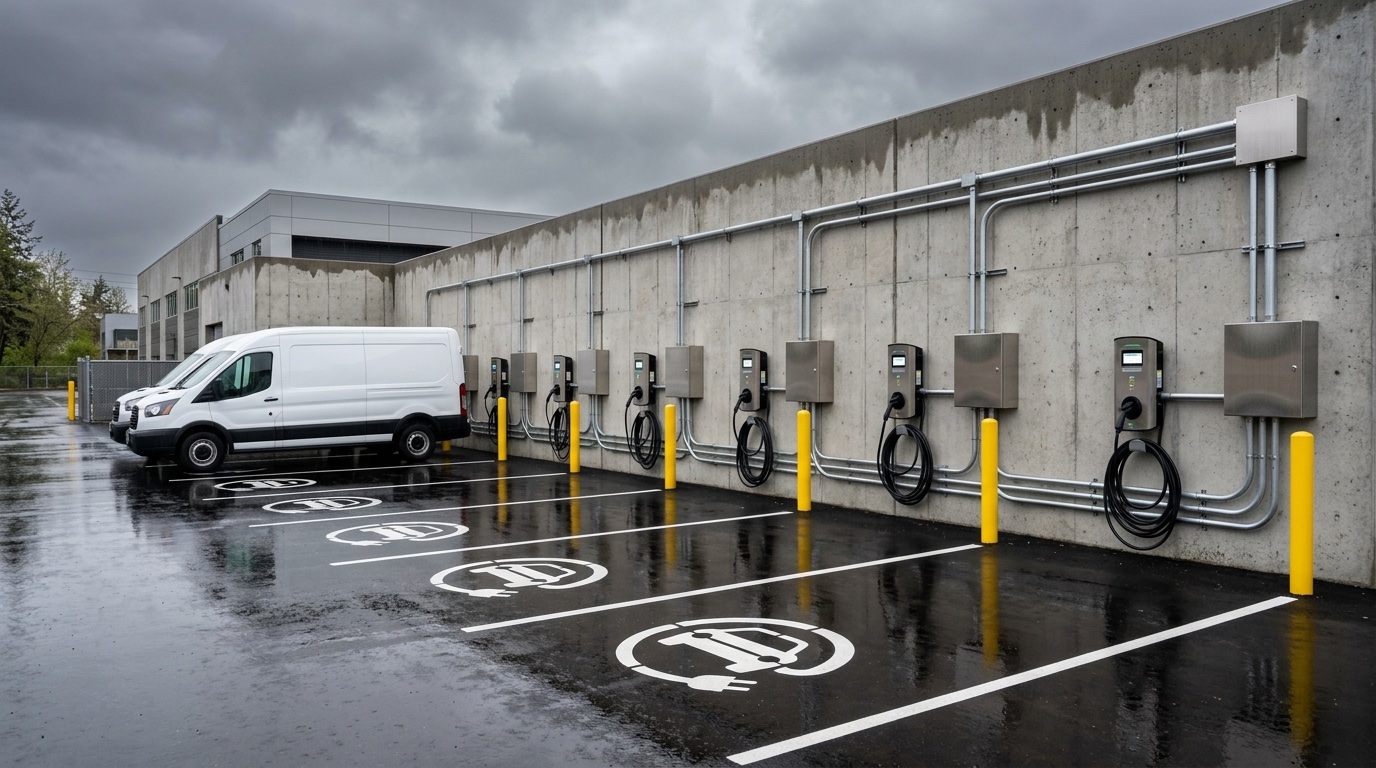
Workplace charging, customer-facing stations, and multifamily installations with metering and load management. We design for the chargers you need now and the conduit you'll want later.
Why we look before we price
Two houses with the same charger can be very different installs. The distance from the panel to the parking spot, whether the route runs through finished walls or an open garage, how full the panel is, and how much service capacity is left all change the work. Rather than quote a flat number and revise it later, we assess on site and give you one figure you can rely on.
Hardwired or plug-in
A hardwired wall unit is the cleanest and most reliable setup for daily charging, and it allows higher charging rates. A NEMA 14-50 receptacle costs less up front and lets you take a portable charger with you, but receptacles used for daily EV charging need to be industrial-grade and correctly protected. We'll explain the trade-offs for your vehicle and driving, and install whichever suits you.
Rebates and incentives
Oregon utilities and state programs have offered EV charger rebates at various times, and eligibility, amounts, and funding change. Check your utility's current residential EV program before you buy equipment, since some programs only cover specific charger models. We provide the permit record and invoice documentation those applications typically ask for.
A recent install
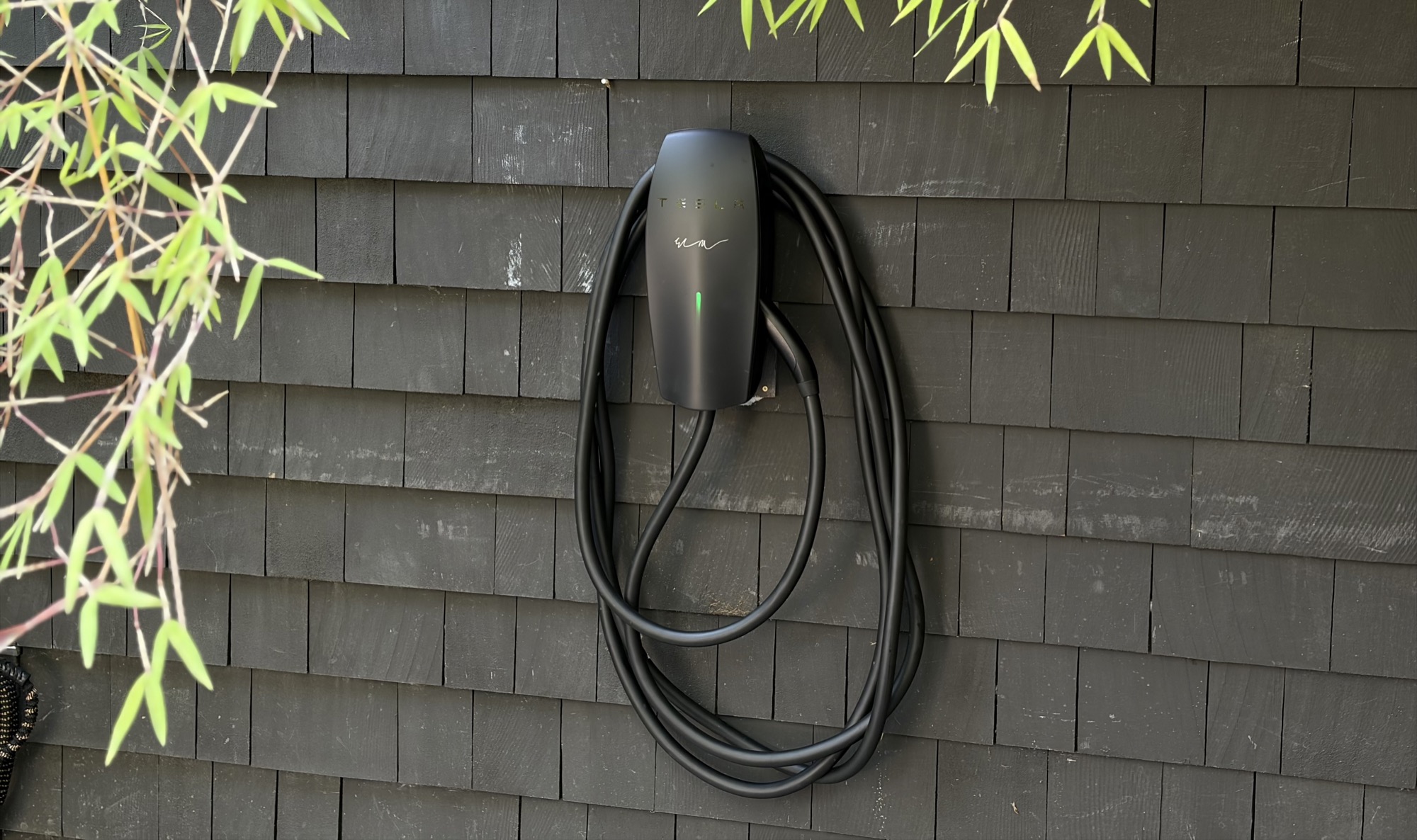
In Portland we installed a Tesla Wall Connector on a dedicated circuit with correct overcurrent protection, mounted on shingle siding with the cable routing kept tight to the structure, then labeled and tested the system. The case study is linked below.
Our Process, Step by Step
- On-site assessmentWe look at your panel, available capacity, and where the car parks before we price anything. Photos can start the conversation, but the quote comes after we see it.
- Load calculationWe confirm whether your service can carry a charging circuit as-is, or whether load management or a panel upgrade is the better route.
- Fixed quoteOne price for the defined scope, with any options listed separately. You approve it before we schedule.
- PermitWe pull the electrical permit with your city or county.
- Install & configureDedicated circuit, correct overcurrent protection, charger mounted and set up, cable routing kept tight and clean.
- Inspect & testThe work is inspected, labeled, and tested with your vehicle where possible.
Code & permits
A new 240-volt EV charging circuit requires an electrical permit and inspection in Oregon. The NEC treats EV charging as a continuous load, which means the circuit has to be sized above the charger's output, and the code has specific rules for GFCI protection on plug-in units and for load-management systems. Residential electrical work in Oregon is governed by the Oregon Residential Specialty Code and the Oregon Electrical Specialty Code, both built on the National Electrical Code. Permits are issued by the city or county building department that has jurisdiction over the address, and the finished work is inspected by that office. We file the permit, schedule the inspection, and meet the inspector, so you never have to stand in line at a counter.
Who issues electrical permits in Oregon →A Yearly Safety Inspection and Member Pricing
Plans start at $19/month with an annual electrical safety inspection and a labor discount on service and repairs. Ridge and Summit add yearly standby generator maintenance.
EV Charger Installation — Questions We Hear
How much does it cost to install a home EV charger?
Can my electrical panel handle an EV charger?
Do you handle the permit?
Can you quote an EV charger install over the phone?
Are there rebates for home EV charger installation in Oregon?
Do I need a panel upgrade for an EV charger?
Do you install chargers I buy myself?
EV Charger Installation Work We Can Show You
Field Notes on EV Charger Installation
EV Charger Installation across the Portland metro
Working with a contractor for the first time? Start with Paramount Electric Co. — or see how we work with facility & property managers and general contractors.
See what clients say about working with Paramount — Read our Google reviews.
Ready to talk about ev charger installation?
Request service online or call — estimates come back fast.