
Whole-Home Backup Generators, and What 'Whole Home' Leaves Out
The clipboard had 'whole home' written at the top and the dryer crossed out in pencil. That's the whole product, honestly. A whole home backup generator is a sales line. On site it means which breakers the switch will feed, and whether they can run together without stalling a unit that got picked off a brochure. We've had people pay for the phrase and then find the heat strips were never on the sheet.
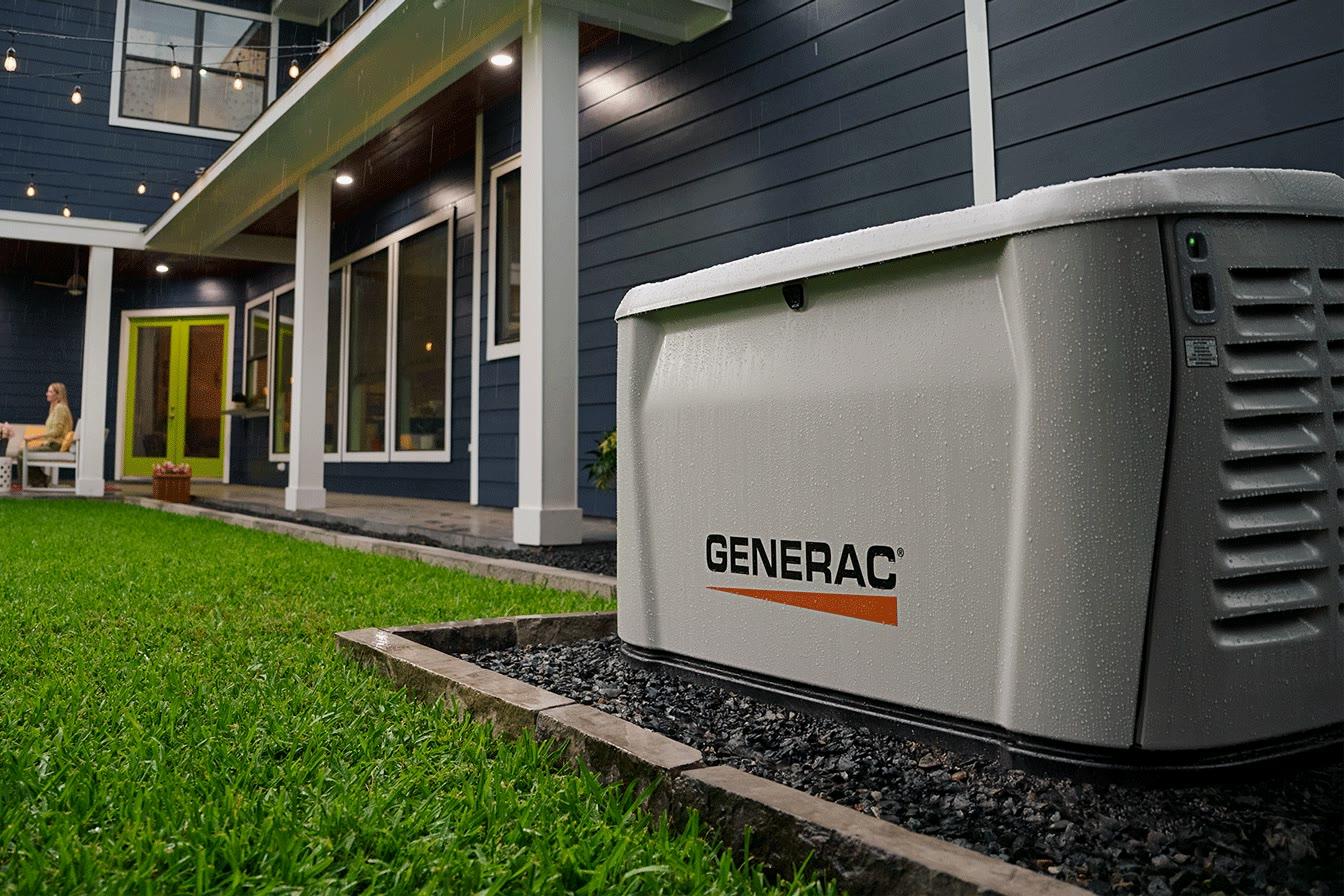
A short list is often the right design
Furnace or heat pump, fridge, a lighting circuit, the modem, the sump. Oven and dryer stay off because you are not baking in an ice storm, and the generator shouldn't be bought as if you are. That is still a standby generator for a house. It isn't a downgrade.
Putting the switch on the service so the panel can be fed is the other layout. Often a 200-amp automatic switch. The generator still will not run every nameplate at once. The code never promised that. An outage doesn't either. We draw the line on paper on the home standby page before a switch gets ordered.
Something has to wait
Load management is a module that tells the water heater to hold off while the heat pump starts. A West Linn house we keep citing because the numbers are boring and real: 22 kW, 200-amp switch, management on the HVAC, gas meter on the far side, a slope that didn't want a pad. It carries the house. It is not a 48 kW commercial set.
Skip that module and you either buy a machine that idles too cold (wet-stacking, if you want the ugly word) or you trip the first time the oven and the heat overlap. I'd rather shed a load for a few minutes.
The can has to fit the switch
Service-rated gear wants a service that matches. A crowded 100-amp Zinsco is a bad place to land a 200-amp switch. Sometimes the job is a panel replacement and a generator, priced as two lines so you can see it. Panel upgrades if you want that half alone.
Working clearance is not optional because the switch was expensive. Behind the water heater is not a location. Something moves.
Fuel stories
Gas runs until the utility's gas has a problem. Rare. Not impossible. Propane runs until the tank is empty, and a big load empties a cute tank faster than the sales sheet. We use the burn rate at the load we actually expect, with the gas fitter in the conversation.
The weekly exercise uses a little fuel. Fine. A unit that never runs is the one that won't start. The storm behavior is on the home standby post. This one is the list.
Argue with the list
Nameplates. Heat strips or not (say which). Well. Range. Dryer. Water heater. The compressor in the shop that gets mentioned as we're walking to the truck. Mark what may run together. Cross the dryer off if you want. Add the garage freezer. You cannot write 'everything' and 'keep it small' on the same line.
We've dropped a size because the owner looked at the dryer and shrugged. We've also told people a 100-amp service cannot wear that switch, panel first. Both are useful. One bundled price that hides them isn't. Walk the lot, then price it. Generator hub. Bring a Tuesday, not Christmas dinner.
Before we leave
Utility off, on purpose, you watching. What came on. What didn't, said out loud while the cover is still off. Then the utility back, because retransfer fails too, just quieter. Ten minutes on the controller: the weekly run, which light means call, where the shutoff is. If you're afraid to silence it on Sunday morning you will unplug it, and then it isn't backup. Service is the plan after that.
A Tuesday, not a holiday
Heat strips change the calc. A gas furnace doesn't. Say which you have before we talk frame sizes. The shop compressor that gets mentioned on the way to the truck has a nameplate. Write it down or it shows up as a trip on the first outage and everyone is mad at the generator.
In the city the pad still has to pass setbacks. Spending more on the switch does not buy a waiver. We walk it. Then we price it. Essential circuits or the whole panel, both get scheduled from the same shop. Bring how you actually live on a Tuesday. A 200-amp automatic transfer switch on a 100-amp service is a mismatch we will not paper over. The panel changes first, or the design stays a subpanel of chosen circuits. Both are honest. Pretending they're the same line item isn't. Load management is how a 22 kW unit carries a heat pump without jumping a frame. Skip it and you buy a machine that sits cold.
Common questions
Is whole-home just a bigger generator?
200-amp service first?
Can it backfeed the line?
What does it cost to run?
Who permits a Portland install?
Panel photo. Appliance list.
We'll say whole panel or a short list, and whether the service has to change.