
EV Charging for Apartments: What Multifamily Owners Need to Know
Residents who drive electric cars charge at home — which, in an apartment building, means the owner's parking lot. Multifamily EV charging is now a leasing amenity, a retention tool, and in new construction a code item. It's also an electrical infrastructure project before it's anything else: the chargers are the easy part, and the service, the feeders, and the plan for growth are where the money and the decisions are. Here's what owners, developers, and HOA boards should understand before they price it.
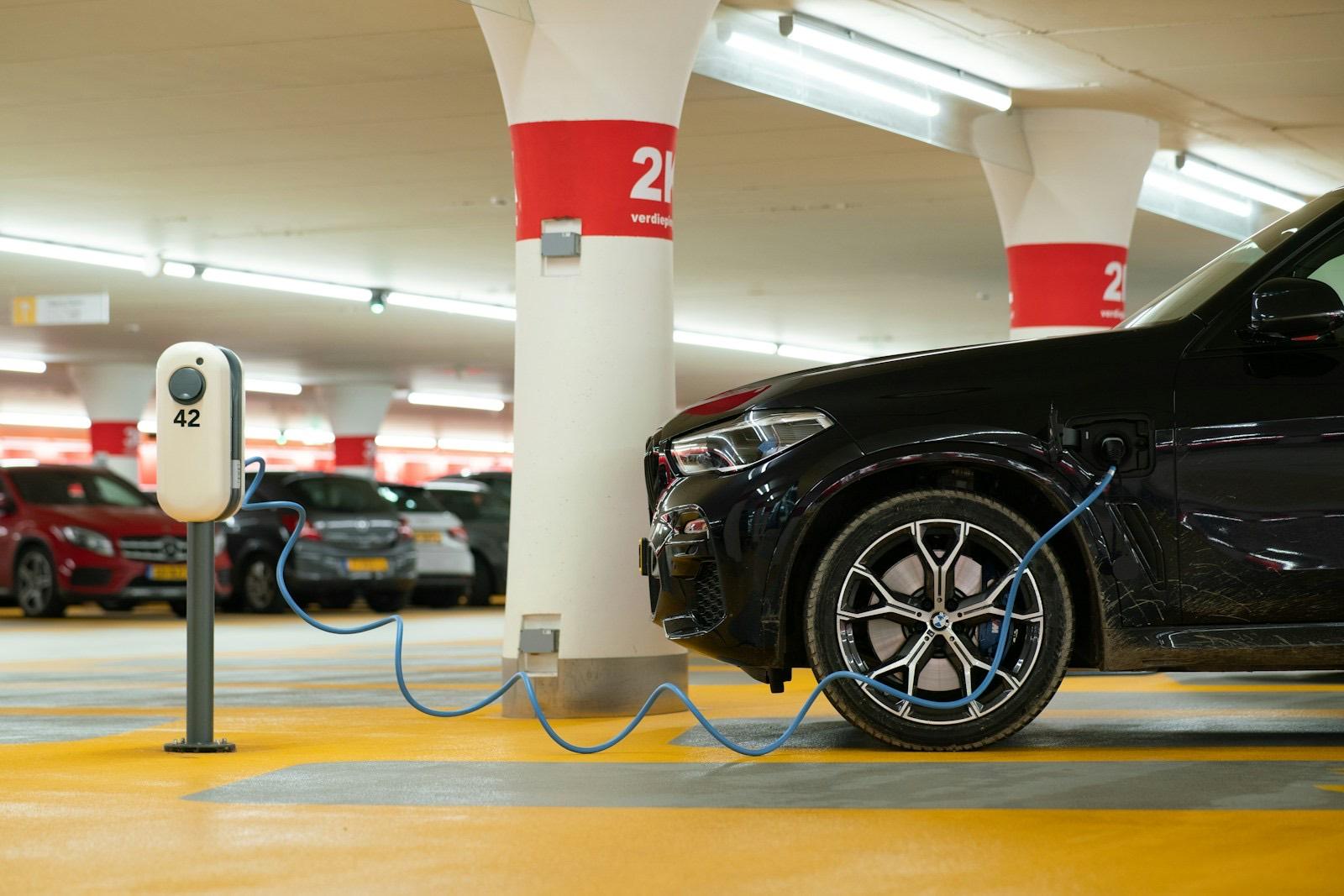
What does it take to add EV charging to an apartment building?
Adding EV charging to a multifamily property takes four things: confirming how much electrical capacity the building has to spare, choosing a charging and load-management approach, running power to the parking stalls, and deciding how residents will be billed. The capacity check comes first, because it determines everything after it.
Most existing apartment buildings were never designed with vehicle charging in mind, so the house service often has limited headroom. That doesn't end the project — it shapes it. Load management lets a modest amount of capacity serve many more stalls than a simple one-circuit-per-charger design would.
How do you know if the building has enough power?
With a load study. We look at the service size, the existing demand — ideally from utility interval data or metering — and the space available in the distribution equipment. The result is a real number for how much charging the building can support today, and what it would take to support more.
Three outcomes are typical. The existing service has room for a first phase of chargers. The service has room only with load management. Or the plan calls for a new, dedicated service for EV charging from the utility, which adds cost and lead time but separates charging loads and metering cleanly from the building.
PGE or Pacific Power is part of that conversation whenever new or upgraded service is involved, and utility timelines are frequently the longest item on the schedule.
What is load management, and why does it matter?
Load management is software and hardware that shares a fixed amount of electrical capacity across a group of chargers, slowing or staggering charging so the total never exceeds a set limit. It lets a property install many more chargers on the same electrical service, which is usually the difference between an affordable project and a service upgrade.
It works because apartment charging is slow and long. A car parked for twelve hours overnight doesn't need full power the whole time. Systems that distribute available capacity among the cars plugged in can serve a full row of stalls from a feeder that would otherwise support only a few.
The electrical code has specific provisions for these systems, and the design has to follow them — how the limit is set, how it's enforced, and how the feeder is sized. That's engineering we handle as part of the project.
Level 2 or DC fast charging for multifamily?
Level 2 is the right choice for nearly all apartment and condo properties. Residents park for hours, so a 240-volt Level 2 charger comfortably refills a typical day's driving overnight at a fraction of the infrastructure cost of DC fast charging.
DC fast chargers need large three-phase services and expensive equipment, and they suit sites where drivers stop briefly — retail, highway corridors, fleets. For multifamily, the better use of the budget is more Level 2 ports and the conduit to add more later.
How do residents pay for the electricity?
There are three common models: networked chargers that bill each resident by session through an app, chargers assigned to specific stalls and billed as a flat monthly amenity fee, and chargers wired to a resident's own unit meter where the building layout allows it. Networked billing is the most common in shared parking.
The choice affects the electrical design. Networked chargers need reliable cellular or Wi-Fi coverage in the garage — worth testing before equipment is ordered — and carry ongoing network fees. Unit-metered charging avoids the billing question but is only practical where a resident's panel is close to their stall.
HOAs should settle the policy questions early: who pays for installation at a deeded stall, who owns the equipment, and how common-area power is reimbursed. Those decisions belong in a board resolution before the electrician arrives.
What should new multifamily construction plan for?
New multifamily and mixed-use projects should plan EV-ready parking from the start: service and panel capacity sized for charging, conduit run to parking stalls, and space reserved for future equipment. Requirements for EV-ready parking in new construction have been changing, so confirm the current code and local rules for each project during design.
The economics are lopsided. Conduit and capacity installed while the slab is being poured and the walls are open cost a small fraction of what the same work costs as a retrofit through finished concrete and landscaping. Even where a project installs only a few chargers on day one, building the pathway for the rest is the cheapest decision on the job.
- Service and distribution sized with EV load in the calculation
- Dedicated panel capacity or space for a future EV panel
- Conduit and pull strings to future charger locations
- A load-management strategy chosen before feeders are sized
- Network coverage in the garage for connected chargers
- Accessible charging stalls laid out per current requirements
Are there incentives for multifamily EV charging in Oregon?
Utility and state programs have offered incentives for multifamily EV charging, and what's available changes from year to year. Program rules usually require approval before installation, so the incentive check belongs at the start of planning. We identify what's currently open for your property and utility and build it into the proposal.
How should an owner phase the project?
Build the backbone once and add chargers as demand grows. A sensible first phase installs the panel, the feeder, and conduit to a full bank of stalls, with chargers on a portion of them. Later phases are then a matter of mounting equipment and pulling wire, not opening the parking lot again.
That approach matches spending to actual resident demand while avoiding the most expensive mistake in this work: a first installation that has to be torn out because it left no room to grow.
Common questions
How many chargers can my building support?
Do EV chargers at an apartment building need a permit?
Can you install chargers in an existing parking garage?
Do you install specific charger brands?
Planning EV charging for a multifamily property?
Send us the property details and we'll start with a load study and a phased plan — or call (971) 471-7897.