
Commercial Electrical Installation, from Temp Power to Final
Somebody had the spider box on a 20-amp breaker and wondered why the saw tripped every time the compressor kicked. Temp power is not a favor you do with leftover wire. Commercial electrical installation has an order. Skip a step and the building waits on a switchboard that isn't on the dock.
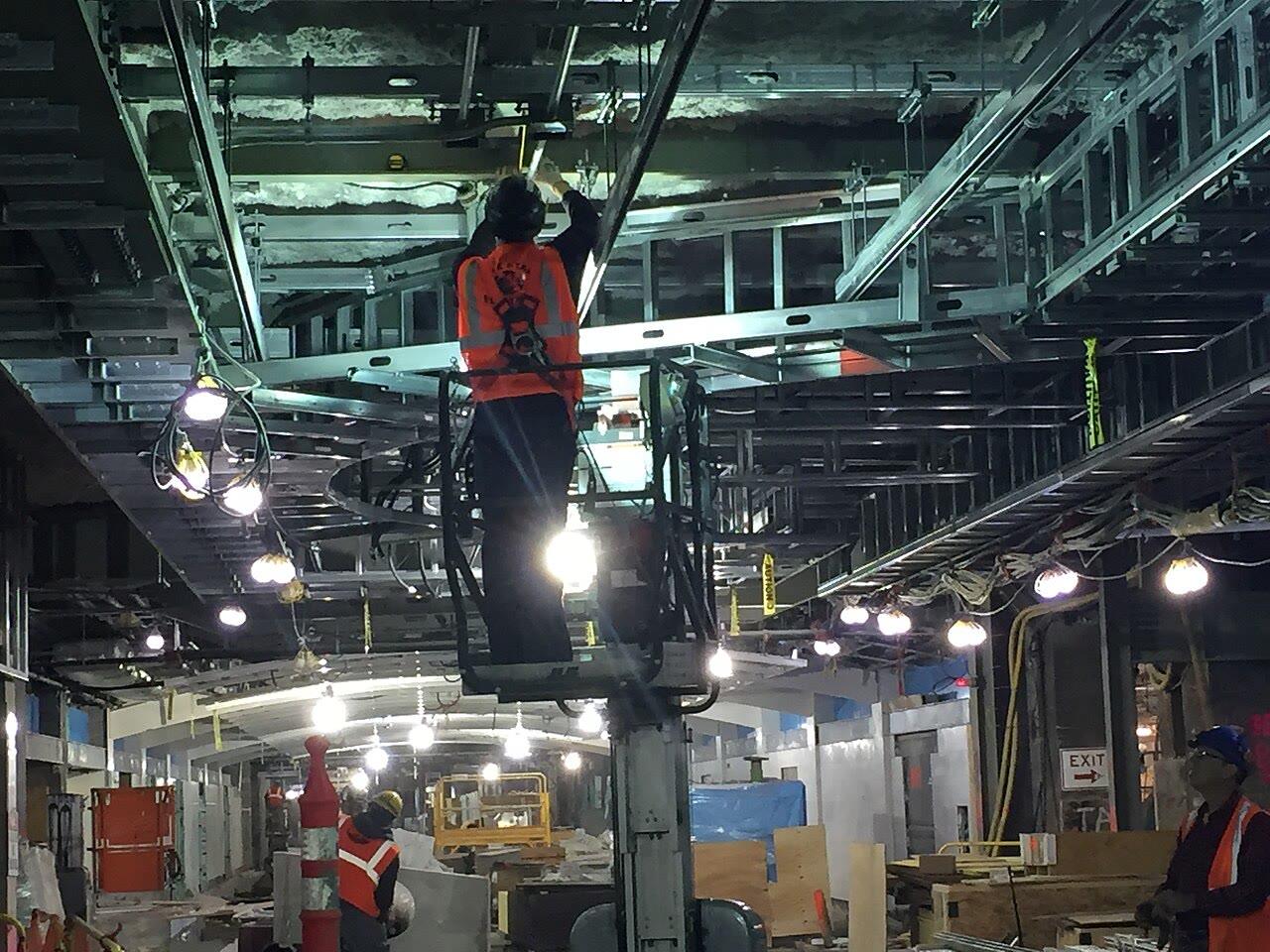

Before there's a building
Saws need a panel, a ground rod, and a permit. Put it where the footing isn't about to eat it. We learned that the hard way on a wet Monday, not from a textbook.
A mixed-use ground-up building in Tigard started exactly there: temp service, then underground raceways, then switchgear, tenant shells, apartments, fire alarm. One crew the whole way. New construction electrical is that path. If the job is half TI and half service calls, commercial electrical construction is the wider door.
While the ditch is open
Site lighting, EV, a spare. The owner will want the spare in two years. Digging the lot twice is how the job goes broke. PGE's clock does not care about your pour.
A 600-amp restaurant and a building with apartments over shops are not sized off square footage we memorized. Equipment list. House loads. Demand. Release the gear when the one-line is stable. A week late is a delay you could have named in pre-con.
Studs
Boxes, home runs, sleeves, firestop the day you drill. Not the night before the inspector with a caulk gun. Occupied TI means nights, a dust wall, tiles back before the neighbor tenant shows up. A ladder in the corridor at 10 a.m. loses you the building even if the wire is pretty.
Camera cable wants that same week. After the rock, it's surface raceway and everyone is unhappy. MC where the spec allows. EMT where it's exposed or the spec is fussy. THHN in the pipe. Not the leftover coil.
When the gear lands
Heavy, and late if the release slipped. Set it, bond it, torque it, mark it, while you can still absorb a cracked lug. A cover on before the inspector sees the guts comes back off. We're annoyed too.
The mechanical sub's disconnect will be on the wrong side of the unit until you walk it with them. Kitchen whips. The sign circuit that has to be hot before their crew flies in. The list is the job. Commercial electrical contracting at this point is whether anybody read the list.
Final
Devices, labels, a typed directory. Test the hood interlock. If it doesn't kill the gas, the kitchen isn't done. Portland will fail you for a missing cover and an open penetration. We've passed the first time because the punch happened before the booking, not after.
Occupied floors shrink the night to one panel and a corridor. Material staged that afternoon. Egress on a circuit we aren't killing. Gear that shows up dented gets rejected that day, not the morning you energize. If you need a stamp, the engineer is on the kickoff. The permit folder stays with the superintendent.
Rough inspection, not a negotiation
Cover goes on after they've seen the splices, not before. I've pulled a lid back off because someone got eager. Portland and the cities around it will fail a final for an unlabeled directory and a sleeve with no firestop. We book the rough when the work is ready, not when the schedule hopes it will be. A phased floor can mean two roughs. That's fine. Rocking a wall and asking the inspector to trust us is not.
The mechanical disconnect will be on the wrong side until you stand there with their foreman. Kitchen whips come up short if nobody measured. The sign circuit has to be hot before their crew arrives or you own a dark sign on opening photos. None of that is clever. It's a list. Commercial electrical installation services, the way we mean it, is a building that can open because the list got read. Temp power that trips every time a compressor starts is not a mystery. It's a 20-amp breaker doing exactly what a 20-amp breaker does. Size it, ground it, permit it, move on. Underground raceways for site lights and a future charger go in while the ditch is open. Cutting the lot twice is how a job loses the money it thought it made on the bid.
Who is in the ceiling
If the low voltage is a different company, say so on day one. Sleeves get drilled once. Firestop gets done by the person who drilled them. Finding out at rough that the camera contractor needed a 2-inch sleeve we didn't leave is a change order with your name on the delay, not ours, if you never told us.
Common questions
When do you need to be on the schedule?
Do you sub the cable out?
What do you want from the GC weekly?
Generator in the same install?
Failed inspection?
When do you need temp power?
Send the set. We'll say what has to be ordered before the slab.