
Electrical Panel Upgrade Cost: What Actually Drives the Price
The cost of an electrical panel upgrade is set by the scope of the service work around the panel, not by the panel itself. Two houses on the same street can get quotes that differ widely because one needs only a new panel and the other needs a new meter base, service conductors, and grounding. Here is what moves the number, and how to read a quote.
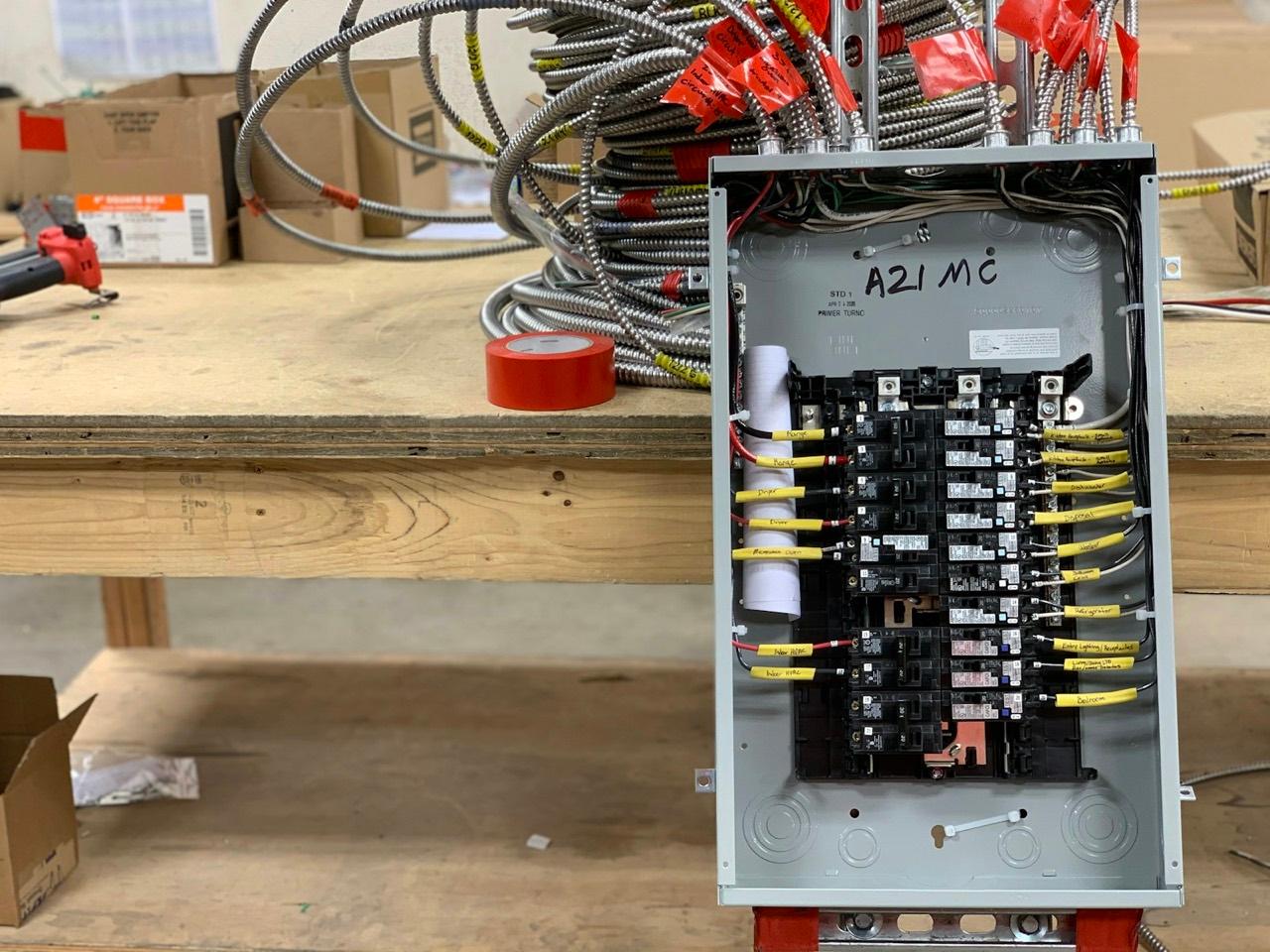
Why is there no single price for a panel upgrade?
Because 'panel upgrade' describes at least three different projects. A like-for-like panel replacement keeps the existing service size and swaps the equipment. A service upgrade, typically 100 amps to 200, changes the panel and usually the meter base, the service entrance conductors, and the grounding. And a heavy-up on an older house can add wiring corrections on top. The panel and breakers are a modest part of the total in every case; the labor and the equipment around the panel are what vary.
That is why we don't publish a flat price, and why a number quoted without seeing the house should be treated as a guess. What we can do is tell you exactly which factors apply to your home.
What factors decide the cost of a panel upgrade?
Eight things account for nearly all of the difference between a simple job and an involved one.
- Service size: staying at the current amperage vs. upgrading to 200 amps (or 320/400 for large homes)
- Meter base and service entrance: whether they can stay or must be replaced to match the new rating
- Overhead vs. underground service: a mast and weatherhead vs. conduit, and who owns which part
- Panel location: whether the existing spot still meets working-clearance rules or the panel has to move
- Grounding and bonding: older homes often need new grounding electrodes and bonding to water and gas piping
- Condition of existing wiring: brittle insulation, aluminum branch circuits, or short conductors that won't reach the new panel
- Number of circuits and breaker types: AFCI, GFCI, and dual-function breakers cost more than standard ones and are required on many circuits
- Permit, utility, and wall repair: jurisdiction fees, the utility's requirements for reconnect, and any siding or drywall work
Does the meter base have to be replaced too?
Often, yes, when the service size goes up. A meter base rated for 100 amps cannot stay on a 200-amp service, and utilities have their own specifications for the equipment they will connect to. If the service size is not changing and the meter base is in good condition, it can usually remain.
This single item is one of the larger swings in a quote. Ask whether the meter base and service entrance conductors are included, and if not, why not.
How do overhead and underground services differ?
With an overhead service, the upgrade commonly includes a new mast, weatherhead, and service conductors down to the meter, and the mast has to meet height and attachment requirements. With an underground service, the conductors arrive in conduit; whether the existing conduit and conductors are adequate for the larger service determines whether any digging is involved. The utility owns part of the run in both cases, and where the ownership line falls varies by utility and installation.
What does a good panel upgrade quote include?
A fixed price for a clearly defined scope, with anything optional listed separately. You should be able to see what is being replaced, what is staying, and what would trigger a change.
- Load calculation showing the service size is right for the house
- Permit and inspection
- Utility coordination for the disconnect and reconnect
- Panel, main breaker, and branch breakers, with the breaker types named
- Meter base and service entrance work, or a clear statement that they remain
- Grounding and bonding corrections
- Circuit tracing and labeling
- What is excluded: wall repair, painting, and repairs to existing branch wiring found to be damaged
Can you avoid a full panel upgrade?
Sometimes. If the service is large enough and the panel is simply out of spaces, a subpanel solves it for less. If the pressure is coming from one big new load, such as an EV charger, a load-management device can let it share existing capacity. And if the panel is a known-hazard brand but the service size is fine, a same-size replacement is the right project.
The way to know is a load calculation, which compares what your service can deliver against what the house actually draws plus what you plan to add. It takes the guesswork out of the decision and is the first thing we do.
Is the cheapest quote the best one?
Compare scope before price. A low number frequently leaves out the meter base, the grounding corrections, the permit, or the breakers code now requires. Those items do not disappear; they show up as extras, or worse, they are skipped. An unpermitted panel swap can also stall a home sale or an insurance renewal years later.
For a necessary upgrade that arrives at a bad time, financing is available on residential projects through Wisetack. Ask about it with your quote.
Common questions
How much does an electrical panel upgrade cost?
Is a 200-amp upgrade always necessary?
Does the price include the permit?
Can I get a quote over the phone?
Want a real number for your house?
We'll look at the panel, meter, and service, run the load calculation, and give you a fixed quote for the scope.