
How Much Does a Whole-House Generator Cost to Install in Portland?
A fully installed 22–26 kW Generac whole-home system in the Portland area typically runs $13,000–$20,000. Gas line distance, transfer switch size, and panel condition decide where your home lands in that range. Smaller essential-circuit systems typically run $9,000–$13,000, and liquid-cooled systems for large or all-electric homes $25,000–$45,000 or more. These are typical ranges, not quotes — your fixed price comes from a free site assessment, and financing is available through Wisetack for residential customers, subject to approval.
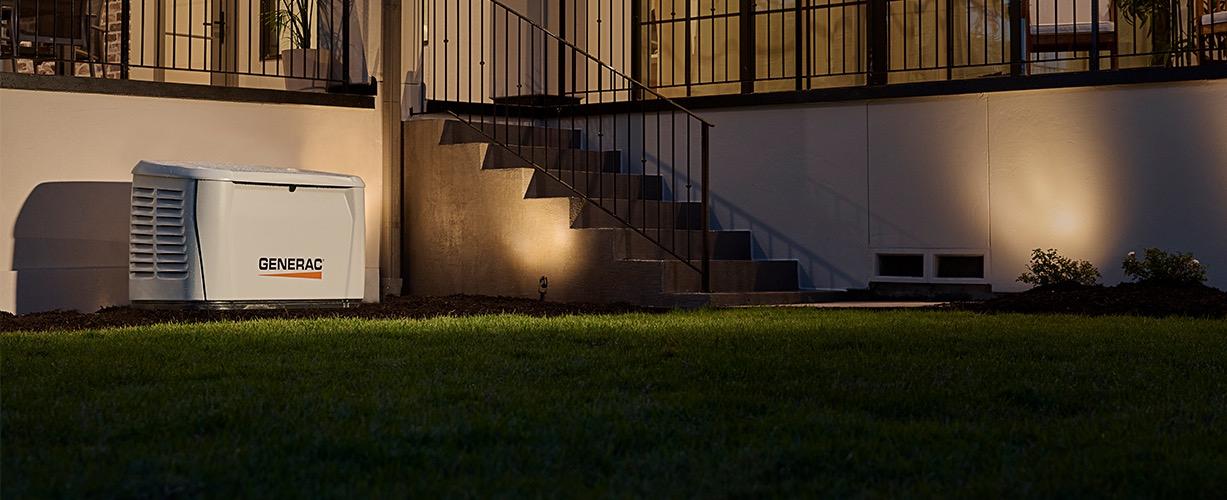
How much does a whole-house generator cost to install in Portland?
Typical installed prices in the Portland area fall into three bands by system size: $9,000–$13,000 for a 10–14 kW air-cooled unit backing up essential circuits, $13,000–$20,000 for a 22–26 kW air-cooled whole-home system with a 200-amp transfer switch, and $25,000–$45,000 or more for a liquid-cooled 30–60 kW system.
Those totals are for a complete installation — generator, automatic transfer switch, pad, gas and electrical work, permits, and startup — not the price of the generator alone. They are typical ranges, not quotes. Your fixed price comes from a free site assessment, and Wisetack financing is available for residential customers, subject to approval.
- 10–14 kW air-cooled, essential circuits only: $9,000–$13,000
- 22–26 kW air-cooled, whole home, 200A transfer switch: $13,000–$20,000
- Liquid-cooled 30–60 kW, large or all-electric home: $25,000–$45,000+
What determines the cost of a whole-house generator installation?
Seven factors determine the installed cost: the generator's size in kilowatts, natural gas versus propane, how far the gas line has to run and whether the meter needs upgrading, the type of transfer switch, the condition of your electrical panel, permit fees, and the pad and placement. Installation work frequently costs as much as the equipment.
That last point surprises people. A catalog price for a generator tells you what the box costs. It doesn't include the automatic transfer switch, the concrete or composite pad, the gas piping, the electrical feeders and control wiring, the permit, or the labor of licensed trades. A quote that seems low is usually missing one of those.
- Generator size (kW) and model
- Fuel: natural gas or propane
- Gas line length and meter capacity
- Transfer switch type and rating
- Panel condition and any upgrade
- Electrical and gas permits
- Pad, placement, and site access
How does generator size affect the price?
Larger generators cost more, but size should come from a load calculation, not a guess. Many single-family homes are well served by a 22–26 kW air-cooled unit with load management. Jumping to a liquid-cooled unit for a very large or all-electric home is a significant step up in equipment, pad, and installation cost.
The cheapest way to reduce generator cost is to be honest about what has to run. Backing up essential circuits — heat, refrigeration, well or sump pump, lighting, internet — takes a smaller unit than backing up everything. Load management sits in between: it lets a mid-sized generator cover the whole panel by briefly holding off the largest loads. Load management modules typically run $300–$600 each.
Does natural gas or propane cost more to install?
Natural gas is usually the less expensive installation when a gas meter is already at the house, because there's no tank to buy or place. Propane adds the cost of a tank sized for the runtime you want, its placement and piping, and fuel deliveries — typically $2,500–$5,000 or more for the tank and setup — but it's the practical choice for rural properties with no gas main.
With natural gas, the variable is capacity. A generator at full load uses far more gas than a furnace, and many existing meters can't supply both. The gas utility may need to upgrade the meter, and the timeline for that work is theirs, not the installer's.
How much does the gas line run add?
The gas line run typically adds $800–$3,000, and it is one of the biggest swing factors. A short run from the meter sits at the low end; long runs, trenching, or a meter upgrade from the gas utility push it up. A generator set a few feet from the meter needs a short run; one on the opposite side of the house can need a long, larger-diameter line routed around or under obstacles. Longer runs need bigger pipe to hold pressure, so cost rises faster than distance.
This is where site constraints show up in the price. On a hillside project in West Linn, the only location that met setbacks was on the far side of the house from the gas meter, and the gas line extension became a planned part of the scope. It's far better to learn that at the site assessment than on install day.
What does the transfer switch add to the cost?
Every standby generator needs an automatic transfer switch, and its cost depends on its rating and where it sits in your system. A 200-amp service-entrance-rated switch typically runs $1,200–$2,500; a 400-amp service or a two-switch setup typically runs $3,000–$5,000. Load-management modules for a heat pump or EV charger add a modest amount per managed load.
The distance between the transfer switch, the main panel, and the generator matters too, because it sets the length of the heavy feeder conductors. A meter and panel on opposite ends of the house make for a longer, costlier electrical run.
Will I need a panel upgrade?
Not usually — but sometimes. If the existing panel is in good condition and has a proper main breaker, the transfer switch ties in ahead of it. If the panel is obsolete, damaged, overloaded, or one of the known problem brands, replacing it during the generator project is often the right call. A panel or service upgrade, when one is needed, typically adds $3,000–$8,000 or more.
A generator doesn't fix an undersized or failing electrical service; it just feeds it from a second source. We check the panel, the service entrance, and the grounding and bonding at the assessment and tell you plainly whether anything needs correcting first.
What do permits and inspection cost?
Permits and inspection typically run $300–$800. A standby generator needs an electrical permit, and the gas piping typically needs its own permit. Fees vary by jurisdiction — Portland and the surrounding Oregon counties differ — and they're a small share of the total. The inspection is what puts the installation on record for your insurer and a future buyer.
An installation done without permits tends to surface at the worst time — a home sale, an insurance claim, or a warranty question. A proper quote lists permits as a line in the scope, not as an afterthought.
How do placement and the pad affect cost?
The pad and placement typically run $300–$800. The unit needs a level, stable base and a location that meets the manufacturer's clearances and local setbacks. A flat spot near the meter and panel is the low-cost case; a long distance from the meter, a slope, or a sound enclosure costs more. Slopes, retaining work, tight side yards, long trenching, and difficult equipment access all add labor.
Sound and neighbors matter as well. Some jurisdictions and homeowner associations have rules about where mechanical equipment can sit and how loud it can be at the property line, which can push the unit to a location with longer gas and electrical runs.
How do I get an accurate price for my home?
Get a free site assessment and a written, fixed-price quote for a defined scope. The ranges on this page tell you roughly where you'll land; the assessment tells you exactly. A real quote names the generator and transfer switch, states what's included for gas, electrical, pad, permits, and startup, and lists options separately. Scope changes and unforeseen conditions should be handled by written change order.
Paramount Electric Co. is a Generac Authorized Dealer and licensed Oregon electrical contractor. We run the load calculation, confirm gas capacity and placement on site, and give you one number for the complete installation. Financing for residential customers is available through Wisetack, subject to approval.
Common questions
Is the generator or the installation the bigger part of the cost?
Can I lower the cost by backing up fewer circuits?
How much does a whole-house generator cost in Portland?
Are these prices a quote?
Is financing available for a home generator?
Want the fixed price for your home?
Schedule a free generator assessment — we'll run the load calculation, check gas and placement, and give you a fixed price for the complete installation.