
Emergency & Exit Lighting Testing Requirements for Oregon Businesses
Emergency and exit lights are the only electrical equipment in a building that exists for a moment nobody wants to happen: the power is out, possibly there's smoke, and people need to find the door. They sit on the wall for years doing nothing visible, which is exactly why they fail unnoticed. Testing is how a business knows they'll work — and how it shows the fire inspector that it knows. Here's what's typically required and how to stay ahead of it.
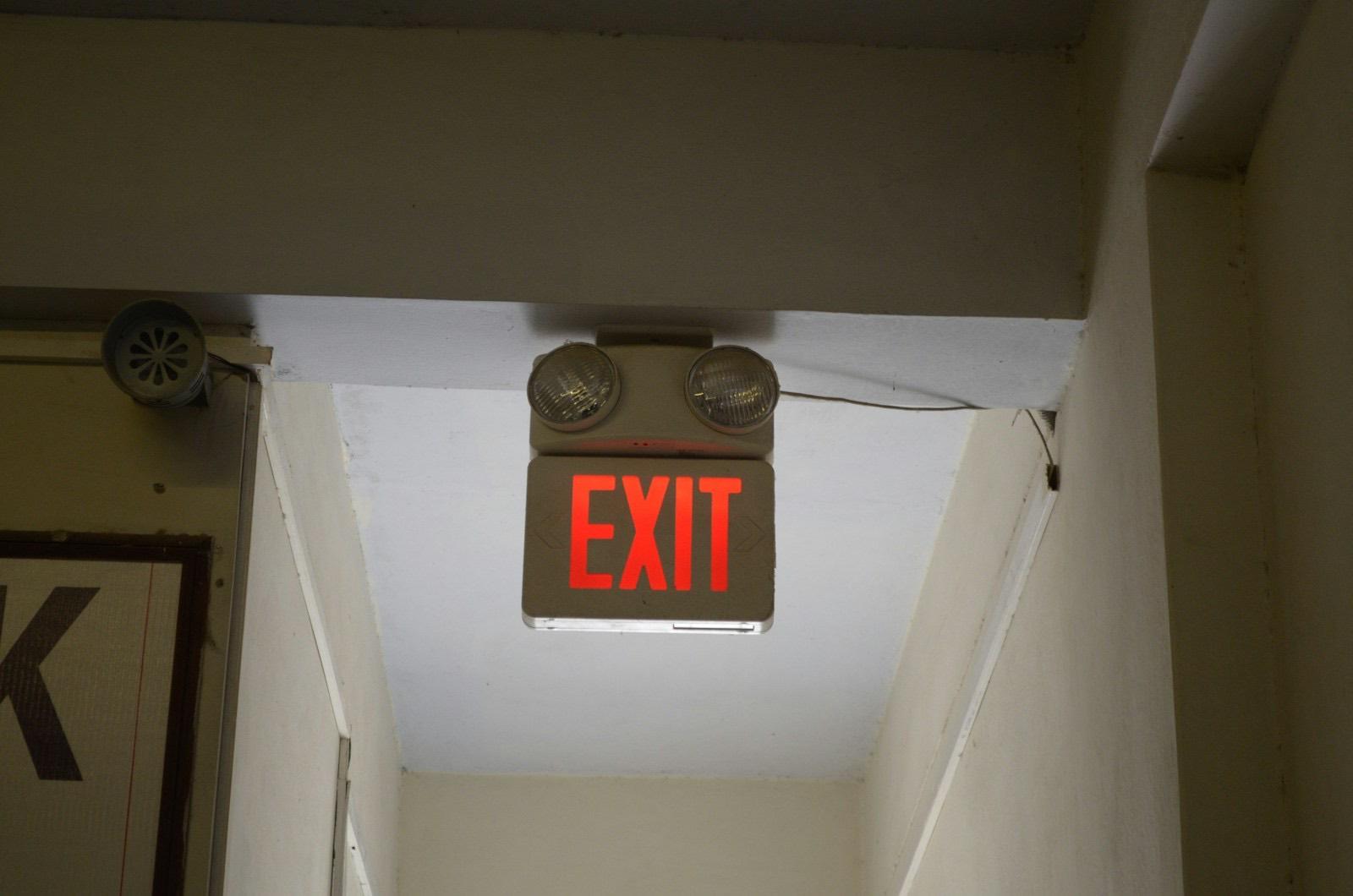
How often do emergency and exit lights need to be tested?
Fire and life-safety codes commonly require two tests of battery-powered emergency and exit lighting: a functional test of at least 30 seconds every month, and a full-duration test of 90 minutes once a year. Written records of both are generally required. Confirm what applies to your building with your local fire marshal or building official.
Those intervals come from the model fire and life-safety codes that Oregon's adopted codes are based on. The local authority having jurisdiction enforces them, and specific occupancies — healthcare, assembly, schools, residential care — can carry additional requirements. When in doubt, the fire marshal's office is the authority, and it's a quick call.
What does the monthly test involve?
The monthly test is a short check that each unit switches to battery and lights. On most units it means pressing and holding the test button for about 30 seconds and confirming the lamps come on at normal brightness and the exit sign stays lit. It can be done by trained building staff.
The discipline is in doing every unit, every month, and writing it down. A walk-through with a floor plan and a log sheet takes minutes in a small building. In a large one it's a real task, which is why some fixtures are specified with self-testing electronics that run the test automatically and flag failures with an indicator light.
- Press and hold the test button for about 30 seconds
- Confirm all lamp heads light and are aimed at the egress path
- Confirm the exit sign is fully illuminated on battery
- Check the charge indicator light after releasing the button
- Look for physical damage, obstructions, or missing units
- Record the date, the unit, the result, and your initials
What does the annual 90-minute test involve?
The annual test proves the batteries can carry the lights for the full required duration, commonly 90 minutes. Power to the units is interrupted — at the breaker or with the test switch — and each fixture has to stay adequately lit for the entire period. Units that fade or go dark early have failed.
This is the test that finds the real problems. A battery that's near the end of its life will pass a 30-second check every month and die fifteen minutes into a real outage. The annual test is the only thing that exposes it.
It should be planned: batteries need time to recharge afterward, so the test is best run when the building is unoccupied or at low occupancy, and not right before a forecast storm. Most businesses hire it out for exactly that reason.
What records do you need to keep?
Keep a written log of every monthly and annual test showing the date, the units tested, the result, who did it, and any repairs made. Fire inspectors routinely ask for it, and so do insurers and corporate facility departments. A test nobody can document is, for inspection purposes, a test that didn't happen.
A numbered fixture list or marked-up floor plan makes the log meaningful — 'unit 14, north stair' rather than 'hallway light.' We provide a written report with each inspection so the records are ready when someone asks.
What usually fails?
Batteries, by a wide margin. Rechargeable batteries in emergency units have a limited service life and lose capacity gradually. After that come burned-out lamps in older units, failed charging circuits, damaged or misaimed lamp heads, and units that were disconnected or blocked during a remodel.
Older fixtures with incandescent lamps and aging batteries often aren't worth repairing. LED emergency units and exit signs draw a fraction of the power, hold their rated duration longer, and are available with self-diagnostics. When several units fail the same annual test, replacing the group is usually the better spend.
- Batteries at end of life — the most common failure
- Burned-out or missing lamps
- Charger or circuit-board failure: no charge indicator
- Lamp heads knocked out of aim or blocked by storage or signage
- Units left unpowered after a renovation or panel change
- Exit signs that no longer match the actual egress path
Who is responsible — the owner or the tenant?
It depends on the lease. In many commercial leases the tenant maintains life-safety equipment inside its suite and the landlord handles common areas, but the fire code holds the building's owner and occupants responsible for a compliant building either way. Read the lease, and don't assume the other party is doing it.
Multi-tenant properties are where gaps open up: the corridor units get tested by the property manager, and the units inside a suite get tested by nobody. A single program covering the whole building closes that gap.
When should you call an electrician?
Call an electrician for the annual full-duration test if you don't have staff to run it, for any unit that fails a test, when a remodel changes walls or the exit path, and when a fire inspection lists deficiencies. Replacing a hardwired emergency fixture or exit sign is electrical work and should be done by a licensed contractor.
We test emergency and exit lighting as a standalone inspection or as part of a commercial maintenance program, document every unit, quote any repairs before doing them, and correct deficiencies so the building is ready for re-inspection.
Common questions
Can my own staff do the monthly test?
Do self-testing emergency lights still need to be checked?
The fire marshal wrote up our exit lights. Can you fix that?
Are the rules the same for every building?
Not sure your exit lights would pass?
Schedule an emergency and exit lighting inspection with a unit-by-unit written report — or call (971) 471-7897.