
Why One Contractor Should Run Your Cabling, Cameras & Access Control
On a typical commercial build-out, the wiring behind the walls belongs to two different worlds: line voltage for power and lighting, low voltage for data, cameras, access control, and AV. Hire them separately and you get two mobilizations, two rough-in schedules competing for the same walls, and a seam down the middle of your project where problems get traded back and forth. We self-perform both — here's what that changes.
What low voltage covers
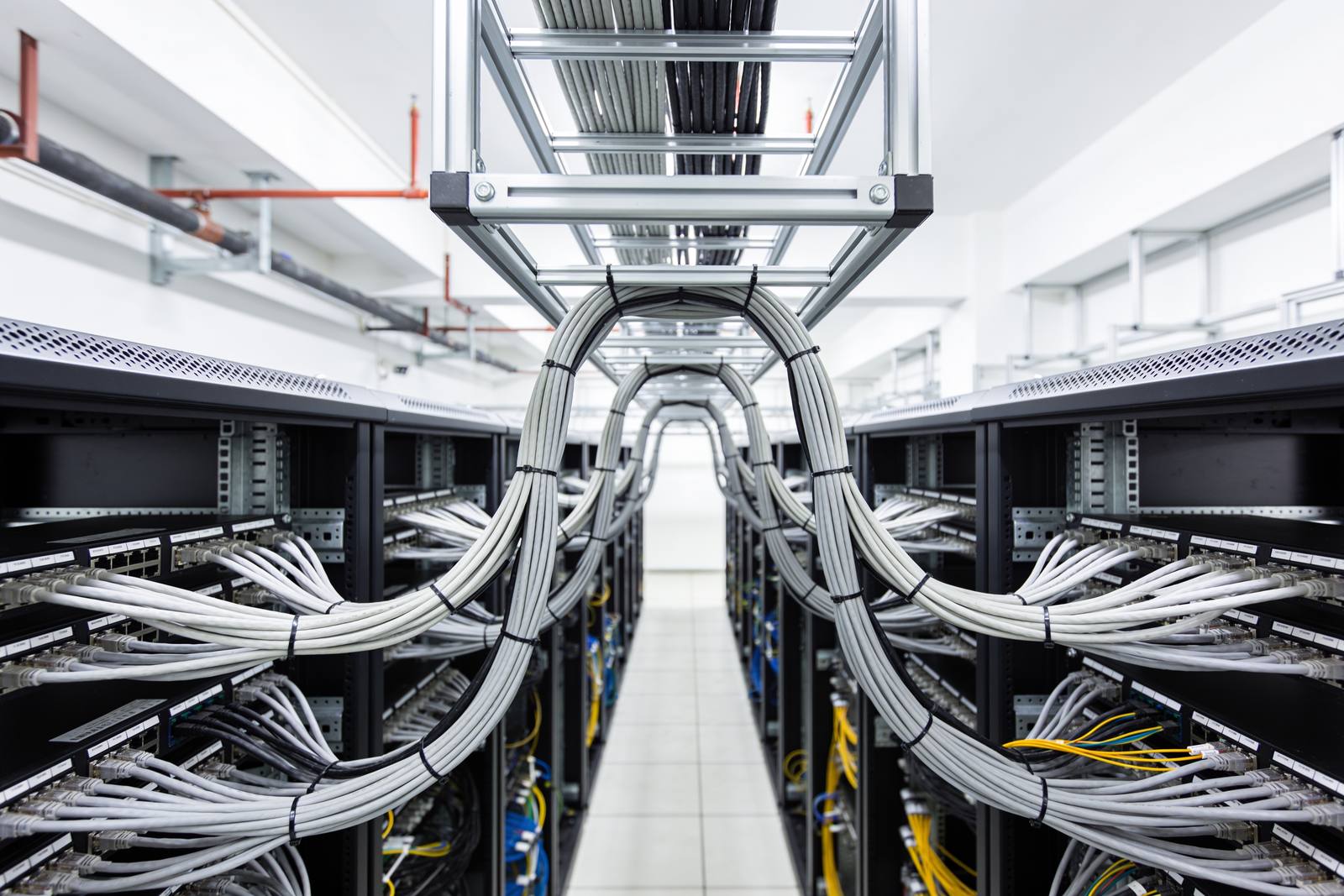
Structured cabling — Cat6/Cat6A horizontal runs, telecom rooms, racks, patch panels, and fiber backbone — is the skeleton. On top of it ride IP camera systems with NVRs, door access control, intercoms, background audio, Wi-Fi access point cabling, TV and AV wiring, and the certification reports that prove every link performs.
We run this scope daily on hotels, senior care facilities, offices, and retail — including guestroom cabling built to hotel-brand standards, where link budgets and device placement are specified down to the outlet.
Why splitting it costs you
Separate low-voltage subs mean a second contract to buy out, a second insurance package to verify, and a second crew whose rough-in has to land in the same stud bays during the same window. When a pathway is missing or a wall closes early, the two contractors bill you to point at each other.
Combined, one crew sequences power and data together: shared pathways planned once, one set of penetrations and firestopping, J-hooks and conduit laid out so neither system blocks the other, and one party accountable for every wire at inspection and closeout.
- Cat6/Cat6A structured cabling, racks, and fiber backbone
- IP cameras and recording systems
- Door access control and intercom
- Background audio and AV wiring
- Wi-Fi AP and hotel connected-room cabling
- Copper certification and fiber test reports at closeout
Where it shows up in real projects
Recent low-voltage scopes on our board: a 300-speaker SIP paging deployment across a nonprofit housing portfolio in Portland, a 24-camera retail surveillance system in Clackamas, and whole-home network and AV cabling in custom residential builds. The same crews that run those systems also wire the panels feeding them — which is the point.
Common questions
Do you handle the network electronics too?
Can you certify cabling another contractor installed?
Do you take low-voltage-only contracts?
One crew for power and data
Send the plans — or the problem — and we'll scope it: (971) 471-7897.