
Commercial Tenant Improvement Electrical: What Owners and GCs Should Budget For
Electrical is usually one of the three largest trade numbers on a tenant improvement, and it's the one most likely to move between the first budget and the final bid. The reason is simple: the cost isn't set by the square footage, it's set by what the existing building can already do and what the new tenant needs it to do. This guide walks through the drivers so owners and general contractors can budget a TI with fewer surprises.
What actually drives the electrical cost of a tenant improvement?
Five things set the electrical number on a commercial TI: the capacity and condition of the existing service and panels, the lighting and controls the energy code requires, the tenant's equipment loads, the low-voltage scope, and the schedule and working conditions. Square footage matters far less than any of those.
That's why two suites of the same size in the same building can carry very different electrical budgets. A second-generation office that reuses existing panels and most of its lighting is a modest scope. A restaurant going into a former retail shell needs new service capacity, dozens of dedicated circuits, and hood and refrigeration interlocks — a different project entirely.
- Existing service size, available panel space, and equipment condition
- Lighting, controls, and energy-code compliance
- Tenant equipment: kitchen, medical, lab, server, or shop loads
- Low voltage: data, cameras, access control, AV, fire alarm devices
- Schedule, phasing, and after-hours or occupied-building work
- Permits, plan review, and utility coordination
Why does the existing service matter so much?
If the suite's existing service and panels can carry the new tenant's load, the electrical scope is distribution and devices. If they can't, the project adds new feeders, panels, a transformer, or a utility service upgrade — typically the single largest swing item in a TI electrical budget, and the one with the longest lead time.
The check is a load calculation against what's actually installed, not what the leasing flyer says. We look at the service rating, how much capacity the landlord has allocated to the suite, how many breaker spaces are open, and whether the gear is still supported by its manufacturer. Obsolete panels can make a simple circuit addition expensive because compatible breakers are hard to source.
Where a utility upgrade is involved, PGE or Pacific Power sets part of the schedule. That conversation should start during design, not after permit.
How do lighting and energy code affect the budget?
When a TI replaces or substantially alters the lighting, the energy code generally requires the new lighting and its controls to comply — occupancy or vacancy sensing, daylight-responsive control near windows, and scheduled shutoff are common requirements. Controls are often a bigger line than owners expect, and they need to be in the first budget.
The offset is that efficient lighting and controls installed during a TI often qualify for Energy Trust of Oregon incentives for PGE and Pacific Power customers. As a Trade Ally contractor we handle that paperwork, but the incentive has to be planned before equipment is ordered, not claimed afterward.
Exit signs and emergency egress lighting are also part of every TI. When walls move, the egress path moves, and the life-safety lighting has to follow it.
Which tenant types cost more to wire?
Restaurants, medical and dental suites, and anything with process equipment carry the heaviest electrical scopes per square foot. General office and soft-goods retail carry the lightest. The difference is the number of dedicated circuits, the size of the equipment loads, and the code requirements attached to the occupancy.
Restaurants bring cooking equipment, hood and make-up-air interlocks, walk-in refrigeration, and a dense receptacle layout — all tied to an equipment schedule that tends to change late. Medical suites bring patient-care-area wiring requirements, imaging or sterilization equipment, and sometimes standby power. Offices are mostly lighting, receptacles, and data, with the budget driven by density and furniture systems.
The earlier the equipment schedule is final, the tighter the electrical number. A bid built on an allowance for 'kitchen equipment, TBD' is a guess everyone will pay for later.
What should owners and GCs ask for in an electrical bid?
Ask for a bid that states what it includes, what it excludes, and what it assumed. On a TI, the assumptions are where the risk lives: reuse of existing panels, who furnishes fixtures, who carries low voltage and fire alarm, and whether work happens during normal hours.
Our bids are fixed-price for the scope shown, with clarifications and exclusions listed and alternates or add-ons priced separately. Scope changes and unforeseen conditions — the junction box buried in a demising wall, the feeder that isn't what the as-builts show — are handled by change order, priced before the work proceeds.
- Scope tied to a specific drawing set and date
- Clarifications and exclusions listed in writing
- Alternates and add-ons priced separately
- Fixture and gear lead times identified
- Permit and plan-review responsibility stated
- Assumed working hours and phasing
How do schedule and building conditions change the number?
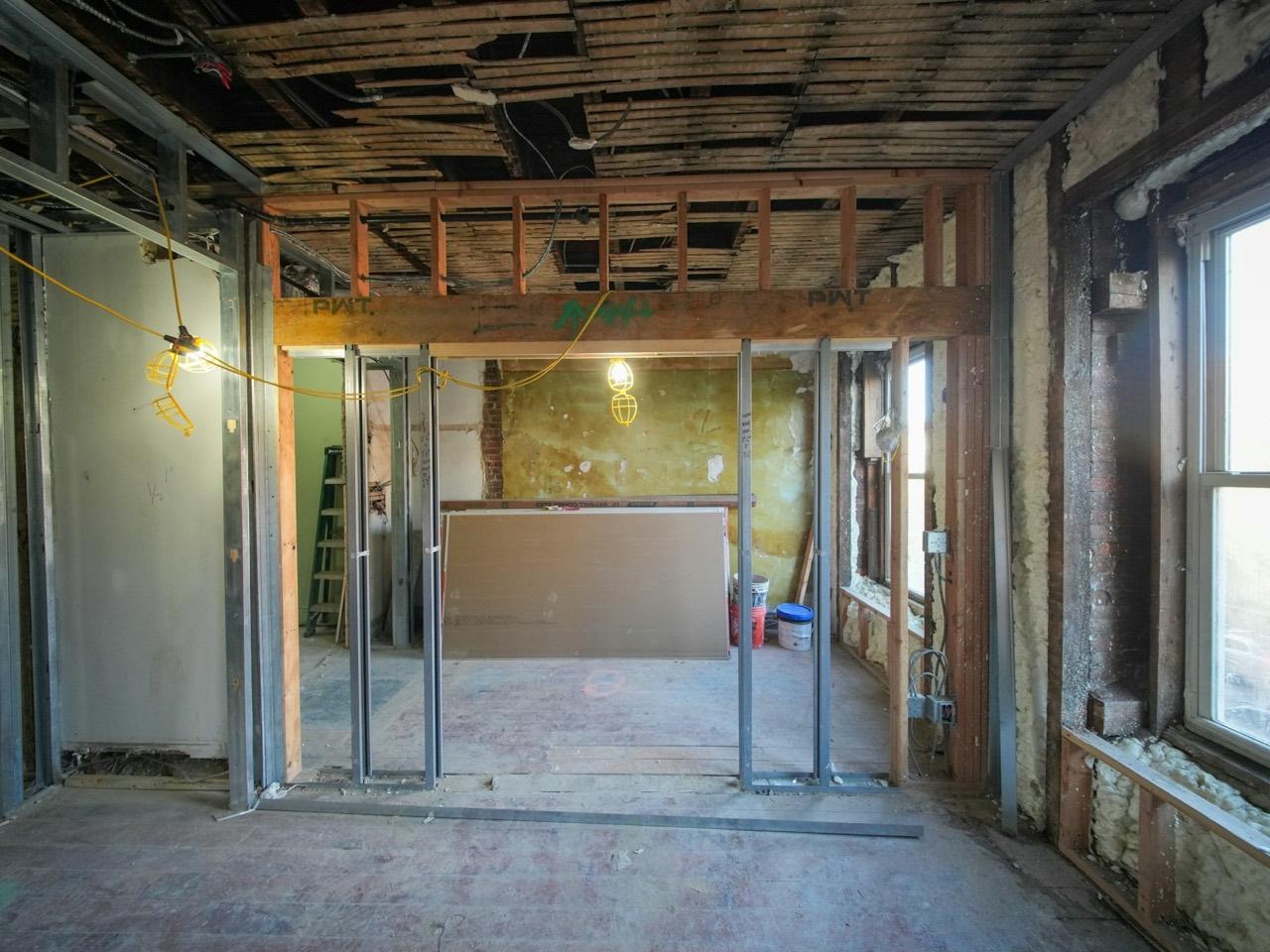
An empty shell with open ceilings is the cheapest place to install electrical work. An occupied building with after-hours shutdowns, noise windows, freight-elevator bookings, and neighbors who can't lose power is the most expensive. The same scope can cost meaningfully more purely because of when and how it has to be built.
Lead times are the other schedule driver. Switchgear, panelboards, and specified light fixtures can take longer to arrive than the entire construction duration of a small TI. Releasing long-lead gear early — sometimes before the permit is in hand — is often what keeps an opening date.
How do you get a reliable electrical budget early?
Bring the electrical contractor in before the drawings are finished. A site walk of the existing suite plus a test-fit plan and an equipment list is enough for us to flag the big items — service capacity, panel reuse, long-lead gear — while they can still shape the design and the lease negotiation.
For landlords and tenants splitting costs, that early look also clarifies what's a base-building upgrade and what's tenant-specific, which is a conversation better had before the work letter is signed.
Common questions
Can you give a price per square foot for TI electrical?
Who pulls the electrical permit on a TI?
Can existing panels and lighting be reused?
Do you handle low voltage on the same contract?
Budgeting a tenant improvement?
Send the plans or the test-fit and we'll walk the space and return a scope-clear electrical number — or call (971) 471-7897.