
Commercial Standby Generators: Sizing, Code & Planning for Oregon Businesses
A facility manager in Portland asked us to 'match the kW on the old quote.' The old quote had no load list. Just a number and a picture of a green box. Commercial standby is the list, the transfer switch, and a test under load. The sticker on the enclosure is the last decision.
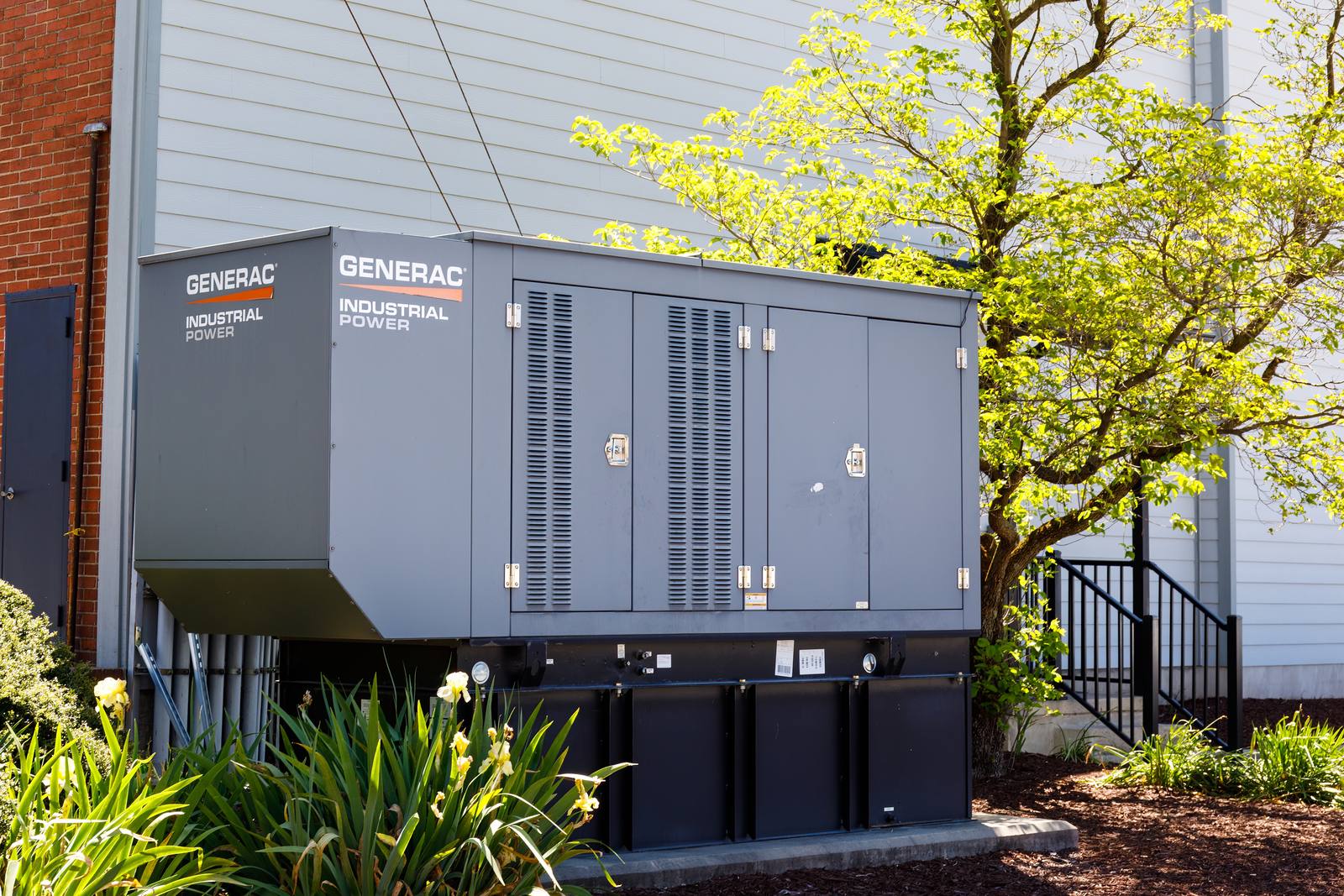
What commercial standby power involves
House units and building units get mixed up in the same Google search. A small office might land around 25 kW on gas. A clinic or a hotel can be hundreds of kW, diesel or gas, with a switch rated for the service and a pad that actually meets the clearances. Load management decides what is allowed to start together when the utility is gone.
Where these jobs die is the electrical half. Feeder size. Which loads are code-required and which are just 'the owner wants the coolers.' The utility. The inspector. We carry that chain in Oregon: study, permit, set the gear, start it, leave a record. Standby generator sales and service in Portland, generator installation, generator maintenance, generator service, generator repair: five phrases, one truck. If the company that sold it will not come back when the controller faults, you bought a sculpture.
Who needs one
Care buildings with meds in a fridge. A restaurant that can't toss a walk-in. A dental office mid-procedure. A hotel that owes guests a lit corridor. A plant that stops making anything the minute the utility blinks. Those are the calls. A single long outage in an ice storm is often the whole payback, and people still want a spreadsheet.
- Load study and generator sizing: what must run, what can shed
- Automatic transfer switch selection and installation
- Natural gas, LP, or diesel fuel coordination
- Concrete pads, clearances, and sound/screening requirements
- Permits, utility coordination, and first-pass inspection
- Startup, owner training, and maintenance transfer
Sizing: the decision that matters most
Too small and it trips on the first real load. Too big and it sits cold and soots up (wet-stacking). We size off calculated demand, not the square footage on the lease. Critical circuits stay. The rest wait their turn.
Elevators and fire pumps drag you into NEC 700, 701, and 702. Different rules for how fast power has to return and how the wiring is separated. A dealer who only sells the engine will not draw that. We do.
Common questions
Do you install the generator or just the electrical?
How long does a commercial generator project take?
Can you maintain a generator someone else installed?
Planning backup power for your building?
Send us the building details and we'll come back with a load study and a real number: or call (971) 471-7897.