
Commercial Rooftop Solar: How the Electrical Scope Works
On most commercial solar projects, two trades share the roof: a solar installer who engineers and mounts the racking and modules, and a licensed electrical contractor who makes all of it into a legal, inspected, grid-connected power system. Building owners usually get pitched the panels. This is a walkthrough of the other half — the part that determines whether the system passes inspection, interconnects cleanly, and keeps producing.
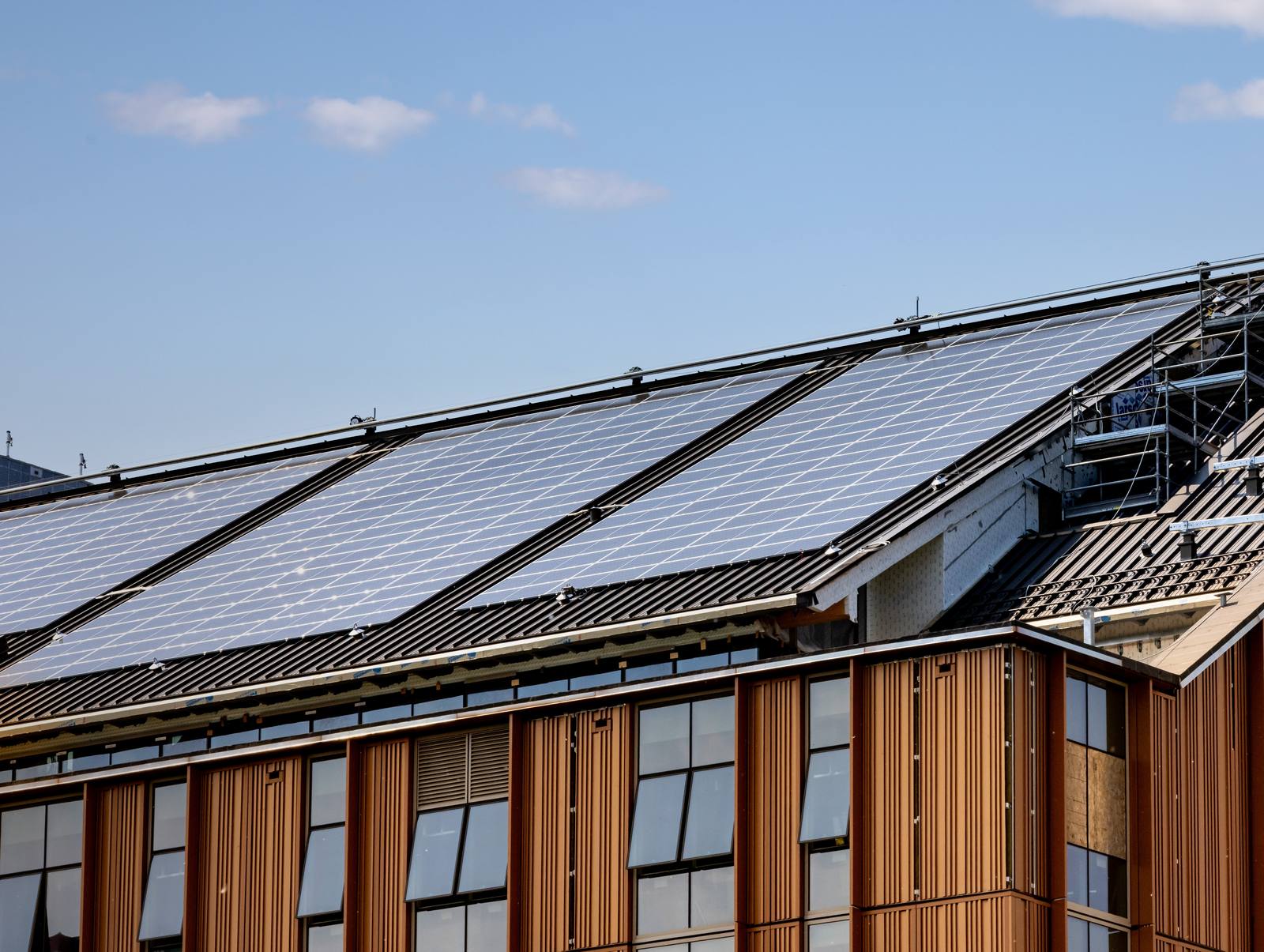
Where the electrical scope starts
Once modules are on the racking, everything electrical typically belongs to the electrical contractor: DC string wiring and homeruns, raceways across the roof and down the building, inverter mounting and termination, AC feeders to the point of interconnection, grounding and bonding of the array and equipment, disconnects, and the labeling package the inspector reads first.
On metal roofs — standing-seam in particular — arrays usually attach with engineered seam clamps and aluminum racking, which keeps penetrations out of the roof. The electrical layout follows the racking plan: string sizing to the inverter windows, conductor routing that survives decades of thermal cycling, and expansion handling at every transition.
The code items that decide inspection day
Modern commercial arrays need module-level rapid shutdown so first responders can de-energize conductors at the roof. Inverter selection matters here — string inverters paired with module-level electronics, or microinverter architectures, each satisfy it differently.
Grounding and bonding is the other inspection magnet: array frames, racking, raceways, and equipment all bonded into one verified system. Add correct overcurrent protection, disconnect placement, and the full NEC 690 labeling set, and inspection day becomes a formality instead of a punch list.
- DC string wiring, homeruns, and rooftop raceways
- Inverter installation and AC termination
- Module-level rapid shutdown compliance
- Grounding and bonding of array, racking, and equipment
- AC feeders, disconnects, and overcurrent protection
- NEC 690 labeling and placarding
- Net-metering interconnection and utility coordination
- Testing, commissioning, and production monitoring setup
Interconnection: where projects stall
The utility side is its own project: an interconnection application, sometimes a service study, metering changes for net metering, and a witness test before permission to operate. The electrical contractor who runs this coordination — and who already knows the building's service capacity and panel schedules — is the difference between a system that produces the month racking goes up and one that waits a season for paperwork.
In Oregon, commercial solar can also stack Energy Trust incentives and federal credits; eligibility rides on using qualified trade allies and documented commissioning.
What to ask before you sign
Whoever sells you the array, ask who holds the electrical license, who files the electrical permit, who owns the interconnection application, and who stands behind the system at the first inspection correction. If the answer to all four is the same accountable contractor, your project has one throat to choke. If it's a subcontractor nobody's named yet, that's your schedule risk.
Common questions
Do you work with solar installers or replace them?
Can you add battery storage later?
Does commercial solar require upgrading our electrical service?
Planning solar on your building?
Send the roof plan and your utility bill and we'll scope the electrical side — or call (971) 471-7897.