
What a Commercial Electrical Safety Inspection Actually Finds
Most electrical failures announce themselves months in advance — as heat, as loose terminations, as breakers that run warm under normal load. The problem is that all of it happens behind panel covers nobody opens until something trips, burns, or shuts the building down. A scheduled safety inspection is how facility managers see those problems while they're still a line item instead of an emergency.
What the inspection covers
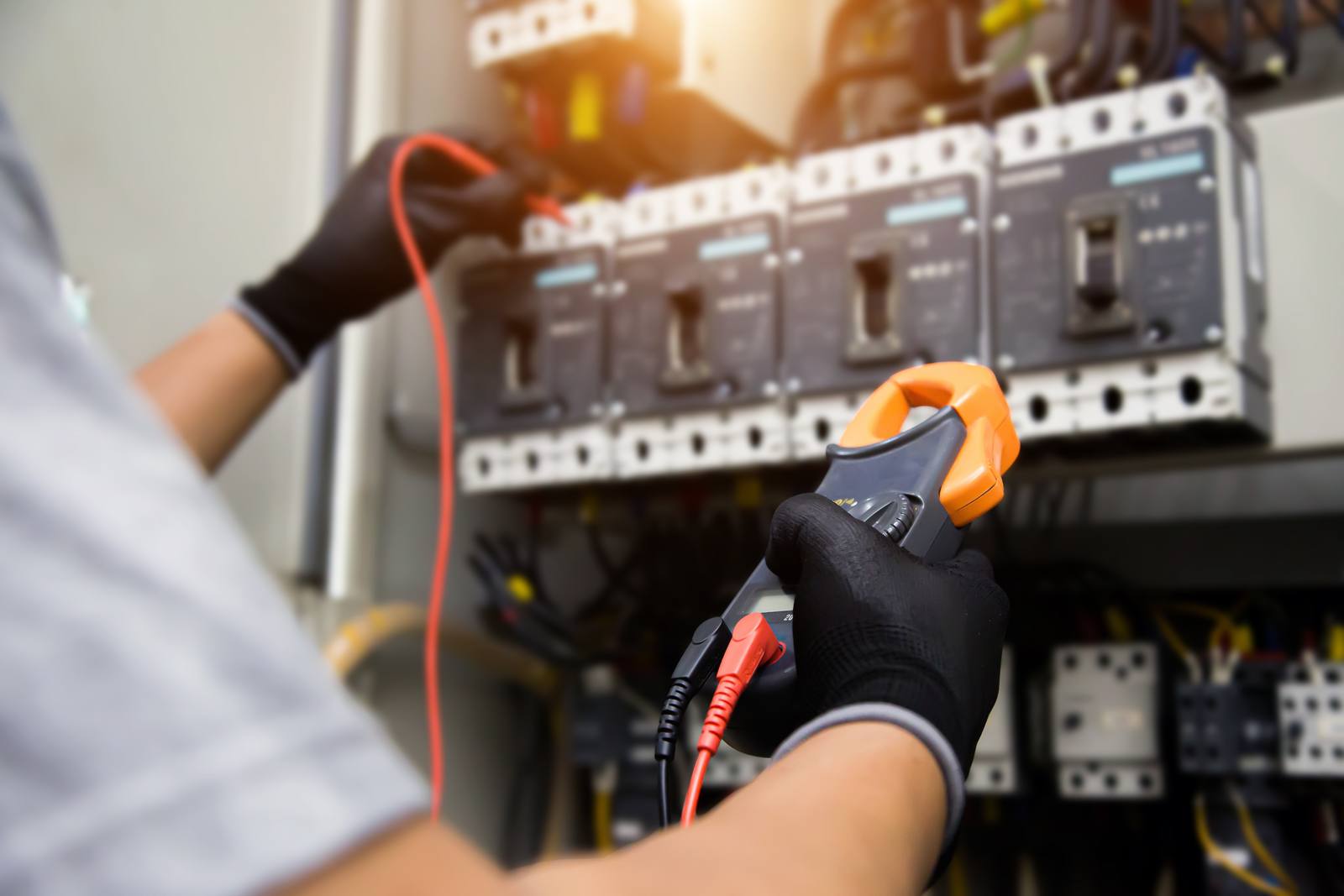
A thorough commercial inspection works from the service down: switchgear and panel condition, breaker testing, torque checks on terminations, infrared scanning under load to find hot spots invisible to the eye, GFCI/AFCI function, grounding and bonding verification, and the state of exit and egress lighting.
Infrared is the workhorse. A loose lug running 40 degrees over ambient looks identical to a healthy one with the cover on — the camera finds it in seconds, and tightening it costs a service call instead of a melted bus.
- Infrared (thermal) scan of panels, disconnects, and switchgear under load
- Breaker and GFCI/AFCI function testing
- Termination torque checks and visual inspection
- Grounding and bonding verification
- Egress and emergency lighting test
- Panel labeling and code-compliance review
- Written report with photos, findings ranked by urgency
When buildings need one
Insurance carriers increasingly require periodic infrared scans on commercial electrical gear — some annually. Beyond that, the triggers we see most: buying or leasing a building (know what you're inheriting), unexplained breaker trips, equipment additions that have grown past the original design, buildings more than 20 years old that have never been scanned, and tenant-improvement planning where existing capacity is a question mark.
For facilities with maintenance standards — healthcare, senior care, food processing — NFPA 70B now frames electrical maintenance as a program, not an option, and a documented inspection is its foundation.
What you get back
The deliverable is a written report, not a verbal 'looks fine': thermal images with temperature readings, photos of every finding, each issue ranked by urgency, and a priced path for the ones worth fixing. Most findings are small — a termination, a breaker, a mislabeled circuit. Finding them small is the entire point.
Common questions
Does the building lose power during an inspection?
How often should a commercial building be inspected?
Can you fix what you find?
When was your building last scanned?
Schedule a safety inspection with a written, photo-documented report — or call (971) 471-7897.