
How a Lighting Retrofit Cuts a Warehouse Power Bill by Half or More
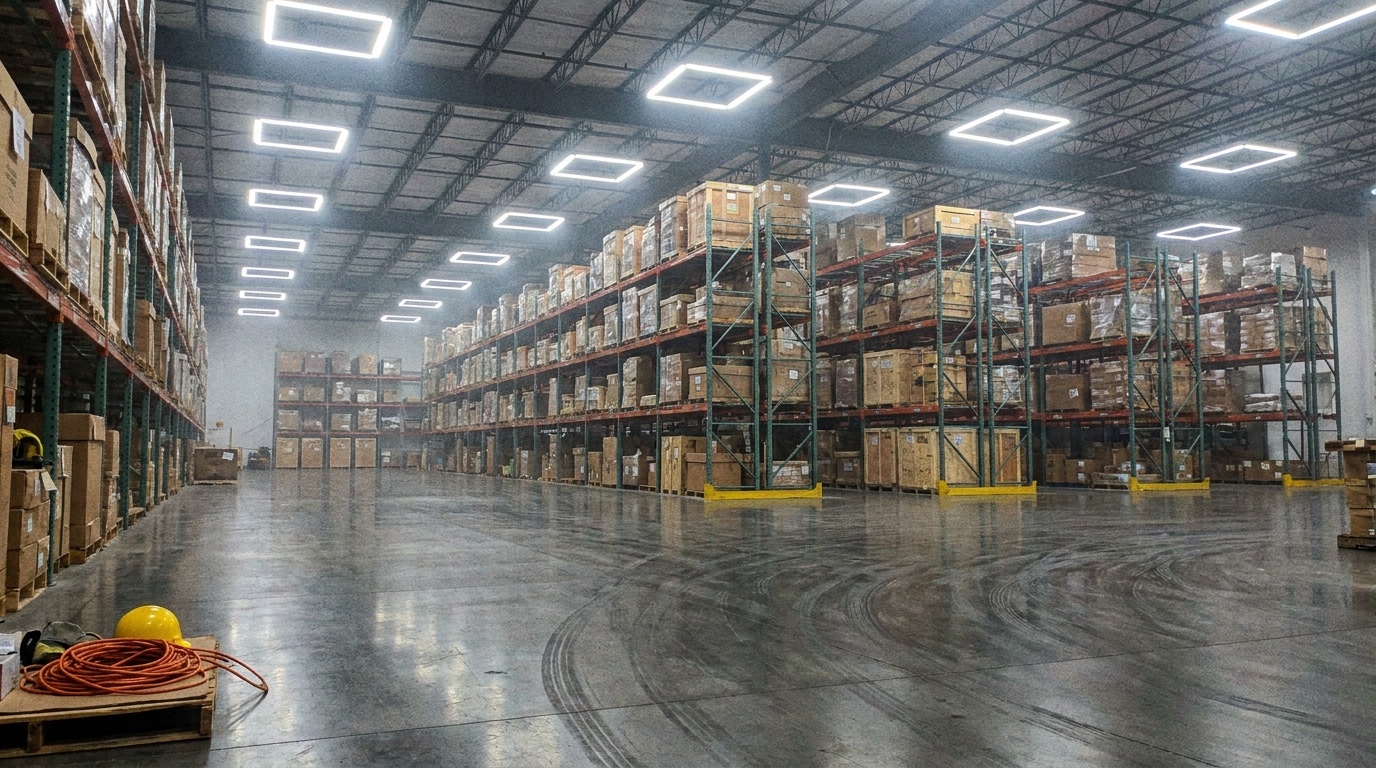
When we retrofitted a Tualatin distribution warehouse from metal-halide high-bays to controlled LED fixtures, lighting energy dropped roughly 60% while light levels in the aisles more than doubled. Neither number is unusual — and the interesting part is where the savings come from, because less than half of it is the fixtures themselves.
Watts: the obvious half of the savings
A legacy 400-watt metal-halide high-bay draws about 455 watts with its ballast and delivers less usable light every month as the lamp ages. The LED fixtures that replace it typically draw a third to half the wattage for more light on the floor, with none of the slow decay or the relamping ladder work. That swap alone gets a warehouse into the 40-50% savings range.
Controls: the half most retrofits leave on the table
Metal-halide can't be switched intelligently — it takes minutes to restrike, so the lights run all shift whether an aisle sees traffic or not. LEDs are instant, which unlocks occupancy-based control: fixtures idle at a low level and jump to full when a person or forklift enters the aisle.
In a racking warehouse, most aisles are empty most of the time. High/low occupancy control is how our Tualatin project pushed past fixture savings to roughly 60% overall — and in facilities with low traffic, controls can outsave the fixture swap itself.
Incentives and the payback math
Commercial lighting retrofits are exactly what utility efficiency programs — like Energy Trust of Oregon on the Oregon side — exist to fund, and incentive paperwork done correctly can cover a meaningful slice of project cost. We handle that coordination as part of the job; on the Tualatin retrofit the incentive application was approved in full.
Payback depends on run hours: a 24/5 operation banks savings three times faster than a single-shift shop. That's why the first question in any retrofit conversation is simply: how many hours a week do these lights burn?
- Count fixtures and note wattages from the nameplates
- Log weekly run hours honestly — including weekend shifts
- Map which aisles see constant vs. occasional traffic
- Ask for incentive coordination in the bid, not after
Doing it without stopping the operation
The retrofit itself is aisle-by-aisle work that can be sequenced around a live operation — on the Tualatin project we worked nights against the warehouse's slotting plan and cleared each aisle before shift start, with zero shifts of downtime across 180+ fixtures. A retrofit that halts picking to save on lighting has the math backwards, and the phasing plan deserves as much attention as the fixture schedule.
Common questions
Is it worth retrofitting if my fixtures are fluorescent, not metal-halide?
How disruptive is the work?
Do you handle the incentive paperwork?
What would your building save?
Send us your fixture count and weekly run hours — we'll give you the honest math, incentives included.